An association born of a gap
In 2021, we realized that in France, aphantasia did not exist in public debate. There was nowhere to talk about it, almost no visibility for the people who were discovering it, and most of what was known stayed written in English. The two of us opened a dedicated space, between translation and plain-language explanation, so the subject would have a place here, people would talk about it, and research would take an interest.
Finally putting words to an inner landscape
Today, Aphantasia Club is a community where people meet to share their experiences and name what happens inside their heads. We organize meetups, and people arrive with what they live and with their questions. Four goals carry this mission:
Gather
Create a space to meet, talk, and feel understood. A community to share what you live, ask your questions, and move forward together, without judgment.
Make it known
Make aphantasia, hyperphantasia, and every way of thinking and imagining known. Explain them simply so they are better understood in daily life, at school, or at work.
Detect
Help each person understand their own mental functioning better, through accessible tools. Aphantasia Club offers clear landmarks and, when needed, a pointer toward the right resources.
Research
Encourage and support studies on mental imagery, and help knowledge move forward. We make it easier for the community and researchers to talk, so the diversity of how our minds work can be better understood.
Who are we?
We are two volunteers, and we both live without mental images. We live the subject every day. Today we still look after the association as a pair, but we widen the circle whenever there is a meetup to prepare or a text to proofread, with members and contributors all over France.
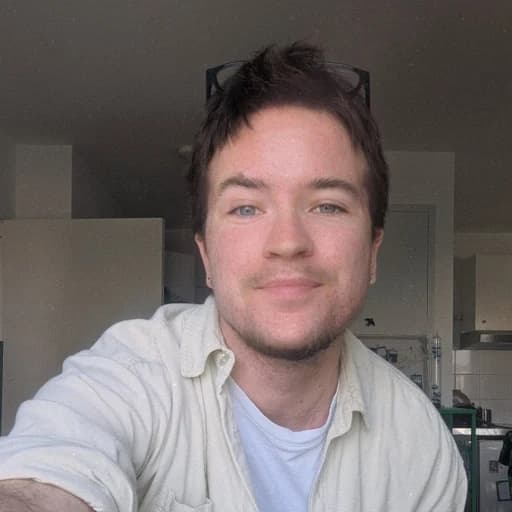
Chärlie Langlais
Co-president
He wrote the first French book on aphantasia, and in Nantes a thesis on memory and language learning. He is often the one who looks for the words to tell what we live.
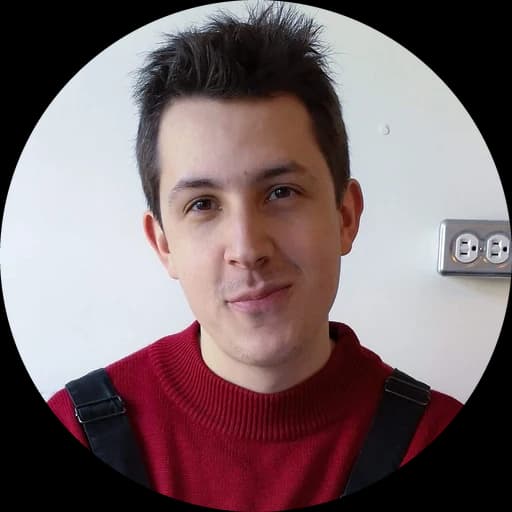
Matthieu Munoz
Co-president
Less gifted with words, he is the one who built this site, and who keeps the association’s digital day-to-day going. He also takes part in making our work known in Dijon.
Five years making aphantasia visible
From the start, we move forward with researchers, people who live with it, and everyone who wants this subject better known and better understood. Their experiences and their work help us ask the right questions.
Five years later, we keep going. Building links, sharing what we know, and leaving room for every voice. The path is not finished, and we walk it with the people who make it possible.
August 24, 2021
Founding of the association
Aphantasia Club is formed. It is the first French association devoted to aphantasia, and to the mental imagery spectrum as a whole.
2023
A research thesis in Nantes
Chärlie Langlais defends a research thesis at the University of Nantes on aphantasia, memory, and learning foreign languages.
2025
Study day with LEAD-CNRS
“Living and thinking without mental imagery” brings researchers and people who live with it around the same table. The association co-organizes the day with the laboratory, then publishes the report.
Read the report (in French)PDF, 10 pages
2025
The association joins the A-Quest consortium
A participatory science project in which university researchers, hospital-university researchers, and people who live with it write the questionnaire together, each with their own specialty and a shared aim.
April 2026
TURFU Festival, in Caen
A workshop and two days at a booth: presenting aphantasia, and moving the questionnaire forward with the people met there.
July 2026
A public day, in Dijon
We present the work in progress, discuss the questionnaire in a workshop, and exchange personal accounts.
September 2026
The new site and the A-Quest questionnaire
The association opens its new site, aphantasiaclub.com, and opens the A-Quest questionnaire for anyone to take.
To follow
And thenWe keep going
More meetups here and there across France, the spectrum encyclopedia still being written, and the scientific validation of A-Quest, which remains to be done. Dates are announced here and on our social channels as soon as they are set.
A-Quest, written by many hands
A-Quest is a participatory science project on the mental imagery spectrum, bringing together researchers and people who live with it, in collaboration with Aphantasia Club. Together, we explored the diversity of aphantasic profiles and the positive and negative effects of the absence of mental imagery on memory, thinking, and daily life.
The questionnaire was born from that shared work. It carries the mark of each of its authors, from the researchers who drew its structure to the people who live with it, whose remarks rewrote several questions.
A consortium of co-researchers
The project brings together university researchers, hospital-university researchers, researchers, and members of civil society, each with their own specialty. Everyone takes part on the same footing, including aphantasic people themselves, whose experience counts as much as a protocol.
Why a new questionnaire
Existing instruments mostly measure how sharp visual images are, and not much else. We also wanted to know what people who live with it need, and what it actually changes in their lives. That means asking about several senses, effort, control, dreams, and memories, instead of a single axis.
How it was built
The questionnaire was written through meetings, video calls, and email exchanges, then presented and discussed in a public participatory-science workshop. Several wordings come directly from remarks by people met at those workshops.
Where validation stands
The questionnaire works and already sends you a summary, but its scientific validation remains to be done. Its dimensions have to be compared with instruments that are already validated, and the structure of the answers has to be analyzed. Until then, its thresholds stay provisional. You can also leave feedback on the questions and the interface from the page set aside for that on A-Quest.
They carry A-Quest with us
The research bodies, universities, hospitals, and festival gathered here carry this work alongside us, each in its own place, from a laboratory bench to a festival booth.
Inserm
(opens in a new tab)
CNRS
(opens in a new tab)
Agence nationale de la recherche
(opens in a new tab)
Université Bourgogne Europe
(opens in a new tab)
Université Claude Bernard Lyon 1
(opens in a new tab)
Hospices civils de Lyon
(opens in a new tab)
CHU Dijon Bourgogne
(opens in a new tab)
Festival TURFU
(opens in a new tab)
We come and talk about it where you are
We are glad to speak with teaching teams and the media, or at public meetups, to present aphantasia, share our experience, and open the discussion with the people discovering the subject.
Schools and teaching teams
Presenting aphantasia to teachers and school staff, to better support the pupils who learn without mental images.
Media
Interviews and personal accounts, so aphantasia is told accurately, without overselling it or shrinking it.
Public meetups
Workshops and booths, as at the TURFU Festival in Caen or during the public day in Dijon.
Two limits to know
There are only two of us, both volunteers, which sometimes makes the schedule a bit of a sport, and we are not healthcare professionals, so some questions, especially at school, will call for someone else. Write to us and say when you need us, and we will see together what is possible.
Everything we write stays free to read and share
What the association has written, what it has relayed, and what it keeps writing page after page. Everything is freely available, and every document can travel freely to the people who need it.
- Encyclopedia
The spectrum encyclopedia, page by page
Our in-depth pages on the four zones of the spectrum. We say what we know, how research measures it, and the limits of each figure.
- ReportPDF, 10 pages
Living and thinking without mental imagery
The report of the study day co-organized with LEAD-CNRS, presentation by presentation, from measuring aphantasia to autobiographical memory.
- Publications
Our explainer posts
(opens in a new tab)Each study that comes out, taken apart in a few images: learning, memory, worry, creation, and the calls for participants.
Memberships and donations, back soon
For the moment, the association is not collecting fees, memberships, or donations. Those steps are being reorganized. We will let you know here, and on our social channels, as soon as it is possible again.
- (opens in a new tab)
Join the conversation
Tell your experience on Discord, without having to prove anything, among people who work the way you do or who are trying to understand.
- (opens in a new tab)
Pass a post along
A share around you helps someone who does not have a word for it yet discover they are not the only one.
- (opens in a new tab)
Answer A-Quest
The questionnaire is open, and each answer helps describe the spectrum better rather than reduce it to one camp.
We read you, and we answer
Write to us by email, whether it is a question, the wish to tell your experience, a journalist’s request, or an invitation to come and speak. Everything lands in the same inbox, and we answer every message as well as we can.